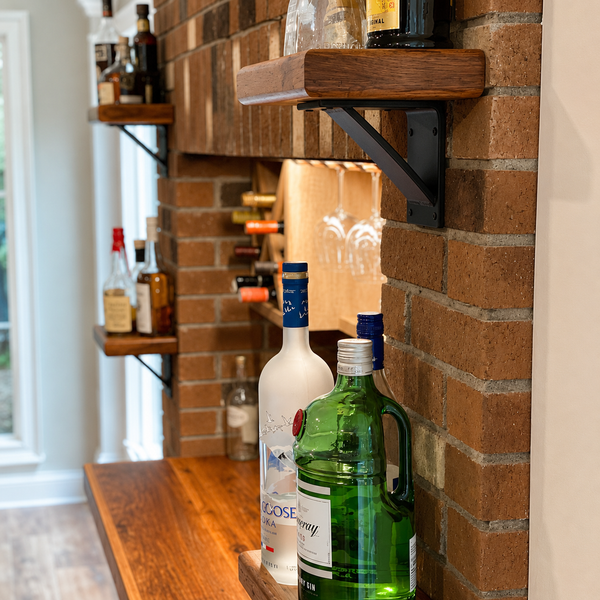
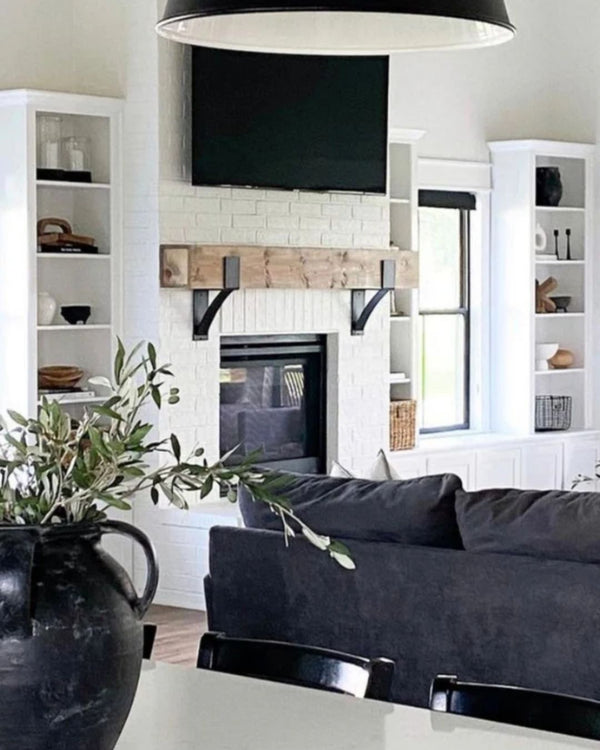
Open shelving has transformed from a practical storage solution into one of the most sought-after design elements in modern homes.
People love open shelving because it solves two problems at once: it gives you more storage and it makes a room look bigger. We have been making the brackets that hold those shelves for close to ten years now, and in that time we have answered a lot of the same questions. This guide covers the ones that come up most often.
If you want to go deep on any one topic, we have written dedicated guides for each step of the process. Links are throughout.
Why Open Shelves Work Better Than Cabinets in a Lot of Spaces
Cabinets close things off. Open shelves keep them accessible, which sounds like a small distinction until you realize how often you avoid reaching into a cabinet and just leave things on the counter instead.
They also force a certain amount of organization. If everything on the shelf is visible, you keep it looking decent. That is not as true with a cabinet door you can close.
The other thing people consistently tell us: after living with open shelving for a few months, most of them would never go back.
Before You Buy Anything
The two decisions that determine how this project goes are the bracket you choose and where you mount it into the wall. Get those right and the rest is straightforward.
Know Your Wall
Drywall, plaster, masonry, and tile each work a little differently. In almost every case you want to hit a wall stud, which gives the bracket a solid anchor instead of relying on drywall anchors alone. A stud finder, a level, and a drill are the three tools you genuinely need before anything else.
How far apart your brackets can be depends on how much weight the shelf will hold. A decorative shelf with a few small objects can span 32 inches. A kitchen shelf holding dishes or a cast-iron pan needs brackets much closer together, and they need to go into studs.
We make several styles, and people ask us which one to get probably more than any other question. The honest answer is that it depends on what you are putting the shelf in and what you want it to look like. They are all made the same way, by hand, from the same American steel, at our shop in Camillus, New York.
The Lucas L Bracket is the one most people end up with. It is a clean L-shape with no extra details competing with the shelf. Works in kitchens, offices, bathrooms, and living rooms.
The Glimmerglass J Bracket hooks over the back edge of the shelf so most of the bracket is hidden behind the board. People use this when they want the floating shelf look but want real steel supporting it.
The Jane J Bracket is a smaller version of the same J-style. Good for bathrooms, smaller shelves, and anywhere you want something tidy and compact.
The Seneca Shelf Support is our heaviest duty option. Multi-point design, larger footprint, made for mantels and shelves that carry serious weight.
Not sure what size you need? Send us a message. We have helped a lot of people figure it out.
What Your Shelf Should Be Made Of
Steel brackets work with wood, butcher block, stone, even glass. The most common choices for people doing this at home are hardwoods like white oak, maple, and walnut, or reclaimed wood for a more worn-in look. Reclaimed pairs especially well with raw or flat-black steel.
One rule that matters regardless of material: the bracket needs to reach at least 75% of the shelf depth to support it properly. A 10-inch deep shelf needs a bracket that extends at least 7.5 inches from the wall.
Installation: The Short Version
Find your studs. Mark your height with a level line. Install one bracket first, check it again, then work from there. Load-test each bracket before the shelf goes on. That is the whole sequence.
The places people tend to go wrong: skipping the level line and eyeballing it, mounting into drywall instead of studs, and installing all the brackets before realizing they are not aligned. Do those three things in order and you will be fine.
There is a reason some open shelves look like a magazine and others look like a storage problem. It is usually not about what is on the shelf; it is about how it is arranged.
Leave some space. About 40% of the shelf empty keeps it from looking crowded. Vary the heights of what you put up. Group things by material or color rather than by function. Mix in something living, a plant, fresh herbs in a kitchen, a small succulent in a bathroom.
The other thing that makes a big difference: do not treat shelves as permanent. Rotate things seasonally. The shelf that looked good in January can look stale by May. Swap a few pieces and it feels new again.
Maintenance Is Simple
Steel brackets need almost nothing. A damp cloth when they get dusty. If you have a raw or natural finish, a light coat of furniture wax once a year keeps them looking good. Check the screws every year or so, especially in kitchens where the humidity changes. That is really it.
Wood shelves need a little more attention: keep moisture off them, use coasters under plants, and refinish when the surface starts to look worn. How often depends on the finish and how hard the shelf gets used.
Common Mistakes Worth Avoiding
The most frequent ones we hear about after the fact: mounting into drywall without hitting a stud, spacing brackets too far apart for the load, and picking a bracket size that does not match the shelf depth. All of them are easy to avoid in the planning stage and annoying to fix after the shelf is up.
Browse the Collection
Every bracket we make ships within 7-10 business days, made to order. We do not keep a warehouse full of inventory sitting around, which means what you get was made for you.
You need 2 brackets for shelves up to 36 inches long, 3 brackets for shelves 36-60 inches, and 4 or more brackets for shelves over 60 inches. For heavy-duty applications like mantels or shelves holding more than 50 pounds, add an extra bracket every 24 inches for maximum support and safety.
How far apart should I space my shelf brackets?
Space your shelf brackets 24-32 inches apart for standard shelving, and 16-24 inches apart for heavy-duty applications. The exact spacing depends on your shelf thickness, load weight, and wood species - hardwoods like oak can span greater distances than softwoods like pine, and thicker shelves (2+ inches) allow wider bracket spacing than thinner shelves.
Do I need to install shelf brackets into wall studs?
Yes, you should always install shelf brackets into wall studs for maximum strength and safety, especially for shelves holding more than 25 pounds. Stud installation ensures your brackets can support their full weight capacity, while drywall anchors alone can only support 50-75 pounds and may fail over time with heavy loads or repeated stress.
What tools do I need to install shelf brackets?
You'll need a drill with appropriate bits, a level to ensure straight installation, a stud finder to locate wall framing, a measuring tape for precise spacing, and a screwdriver or drill driver for mounting screws. A pencil for marking, a square for alignment, and clamps to hold your shelf in place are optional but helpful.
How thick should my wood shelf be for bracket installation?
Your wood shelf should be at least 1.5 inches thick for standard brackets and 2-3 inches thick for heavy-duty applications like mantels. Thicker wood distributes weight more evenly across brackets and provides more material for secure mounting screws, which matters especially for shelves holding heavy items.
What weight can Industrial Farm Co shelf brackets hold?
Our shelf brackets hold between 150-500 pounds per pair depending on bracket size, steel thickness, and proper stud installation. Standard quarter-inch thick steel brackets installed into wall studs typically support 200-300 pounds per pair, while heavy-duty 6-inch wide brackets can support up to 500 pounds when properly mounted into studs.
Can I mount these brackets on tile or brick walls?
Yes, our brackets can be mounted on tile, brick, or masonry walls using appropriate masonry anchors and concrete screws. You'll need a masonry drill bit for pilot holes, concrete anchors rated for your expected load, and patience to drill slowly to avoid cracking tile or brick. We recommend consulting a professional for high-value tile installations or heavy loads.