Transform your home with industrial farmhouse accent walls using products from Industrial Farm Co. Discover creative ideas and techniques for incorporating reclaimed wood, exposed brick, shiplap, metal elements, and wall decor to add character and visual interest to any room.
An accent wall works when it gives a room a clear focal point without looking like it was trying to be interesting. In an industrial farmhouse space, the materials do that naturally: weathered wood, exposed structure, raw metal. The wall becomes the backdrop that makes everything else in the room make sense.
The most effective industrial farmhouse accent walls pair the wall material with functional hardware mounted on it. A reclaimed wood wall with Industrial Farm Co. steel coat hooks becomes a practical entry statement. A shiplap wall with open shelves on steel brackets becomes a dining room feature wall that holds things. The hardware earns the wall its place rather than just decorating it.
Industrial farmhouse interiors use texture heavily: raw wood grain, steel surfaces, concrete, brick. A single wall treated with one of these materials creates depth and visual interest in a way that paint alone cannot. When one wall has real material presence, the other three can stay simple. The treatment should reveal material honestly, not simulate it cheaply.
Materials That Work
Reclaimed wood planks
The most common and most fitting choice. Weathered wood planks installed horizontally or vertically add immediate warmth and age to a room. Works especially well in living rooms, bedrooms, and entryways. When mounting, use the appropriate fasteners for your wall type and make sure the planks are level. A wall that starts straight stays straight through the full run.
Shiplap
Clean horizontal lines with consistent spacing. Can be left natural, painted white, or finished in a warm gray. Works in bedrooms, dining rooms, and hallways where the reclaimed look would feel too rough. Our J-style shelf brackets mount cleanly over shiplap and add functional storage to a wall that already has visual interest.
Exposed brick
If you have original brick, expose it. If you don’t, quality brick veneer panels can replicate the look well enough to work. Brick walls are ideal in kitchens, living rooms with fireplaces, and basement conversions.
Board and batten
Vertical planks with flat battens over the seams. More structured than shiplap, with stronger vertical lines. Good in dining rooms and home offices where you want the farmhouse character without the roughness of reclaimed wood.
Hardware as Part of the Wall
In an industrial farmhouse space, the accent wall and the hardware on it work together.
Reclaimed wood wall + coat hooks and rack: Wood provides warmth, steel hooks provide function, and the combination anchors the entryway in a way that a plain coat rack against a white wall never does.
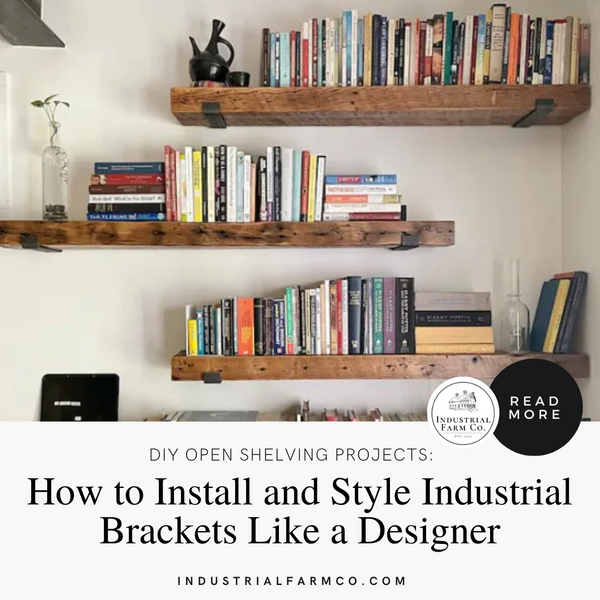
Shiplap wall + open shelving: In a dining room or bedroom, shiplap behind open shelves on steel brackets creates a furniture-like presence without actual furniture.
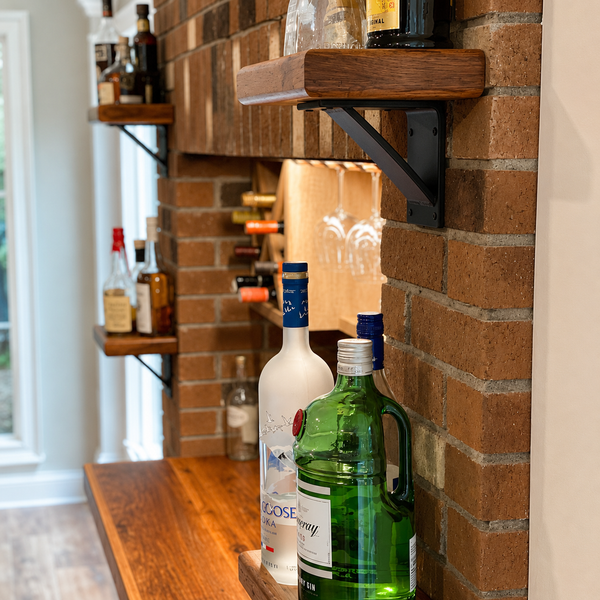
Brick wall + metal hardware: In a kitchen or bar area, exposed brick behind a rack of hanging hooks adds depth and keeps the industrial character consistent.
The hardware should use the same or a complementary metal finish throughout the wall treatment. Mixing finishes on a single wall reads as incomplete rather than eclectic.
Which Rooms Benefit Most
Entry: The first wall a visitor sees. A reclaimed wood treatment with steel hooks is one of the strongest investments in this style.
Living room: Behind the sofa or TV wall. Reclaimed wood or brick here pulls the room together and gives it a clear focal point.
Bedroom: The wall behind the bed. Shiplap or board and batten in a neutral tone adds texture without competing with bedding and furniture.
Kitchen: A brick or reclaimed wood wall behind open shelving. The combination of wall texture and steel brackets makes the shelving feel built-in rather than installed.
Where to Start
Pick one wall in the room you use most. If you are unsure about a material, start with shiplap or board and batten: they are easier to paint over if you change your mind than reclaimed wood or brick. Add hardware that serves a purpose on the wall from the beginning.
Tools and Materials
Wall materials:
Reclaimed wood planks, shiplap panels, or board and batten lumber
Finishing nails or construction adhesive plus nails
Wood stain, paint, or sealant (as needed for your chosen treatment and finish)
What makes a good accent wall in an industrial farmhouse home?
A good industrial farmhouse accent wall uses a real material that creates texture and depth: reclaimed wood planks, shiplap, board and batten, or exposed brick. The material should be honest rather than purely decorative. Pairing the wall treatment with functional hardware like coat hooks or open shelving brackets makes it earn its place in the room rather than just looking good.
What wood is best for a reclaimed wood accent wall?
Weathered pine, oak, or cedar planks are the most common choices. Look for wood with visible grain variation, knots, and age marks. The character in the material is the point. Consistent color or too-uniform planks defeat the purpose. Reclaimed lumber from salvage yards or specialty suppliers gives you the real thing; there are also manufactured products that replicate the look at lower cost.
How do you attach wood planks to an accent wall?
Locate the wall studs and fasten into them with a finish nailer or construction adhesive plus nails. For horizontal planks, level each row as you work. For vertical planks, start from the center of the wall and work outward so the edge cuts are symmetrical. Use a miter saw for angled corners. Seal the wood to protect it, especially in kitchens and bathrooms.
What hardware goes on an industrial farmhouse accent wall?
Steel coat hooks and racks on a wood entry wall, open shelving on iron or steel brackets on a shiplap or brick kitchen wall, or metal pot rails in a kitchen or bar area. The hardware should match in finish throughout the wall treatment. Matte black and raw steel are the most consistent with the industrial farmhouse aesthetic.
Which room is best for an accent wall in an industrial farmhouse home?
The entry is the highest-impact location: it is the first thing visitors see and the first experience of the style. A reclaimed wood wall with steel coat hooks and a shelf is both functional and aesthetically strong. The living room wall behind the sofa or television, and the kitchen wall behind open shelving, are also strong candidates.