Learn how to create a warm and inviting entryway with an industrial farmhouse style. This guide from Industrial Farm Co. offers practical tips on choosing the right furniture, adding storage solutions, incorporating lighting, and using decor elements to achieve a cozy yet stylish space.
An industrial farmhouse entryway solves two problems at once: somewhere functional to put coats, bags, and keys when you walk in, and a wall that sets the tone for the rest of the house. A steel coat rack or a row of individual wall hooks mounted on a reclaimed wood plank does both. The entry is where the industrial farmhouse aesthetic earns its keep most directly, because everything in it needs to work.
Industrial Farm Co. makes steel coat racks and individual wall hooks by hand in Camillus, New York. The Fairmount Style Coat Rack is our most popular entryway piece: multiple hooks, substantial steel construction, built for a wall that gets used hard every day. For smaller entries or a more custom look, individual hooks spaced along a wood plank give you the same function with more flexibility in spacing and layout.
Industrial farmhouse style combines raw materials like steel and wood with a warm, functional sensibility rooted in farmhouse living. In an entryway, that means hardware that looks good and works hard, surfaces that can handle daily use, and an edit that keeps the space from feeling cluttered from the moment you walk in.
The entryway sets the visual tone before someone reaches the living room or kitchen. A well-done industrial farmhouse entry — reclaimed wood, matte black hooks, a simple bench, and a clear floor — feels intentional without being precious. A poorly done one feels like someone put some stuff on a wall and called it done.
Coat Storage: Hooks, Racks, and Placement
The most important element in any entryway is somewhere to hang coats. Without it, coats end up on chairs and the entryway stays permanently cluttered regardless of what else you do.
Coat rack: The Fairmount Style Coat Rack mounts directly to the wall, holds multiple coats and bags without crowding, and has the visual presence to anchor an entryway wall. Mount into wall studs at 66-72 inches from the floor for standard coat hanging height. Position it at eye level when you walk in so it reads as the primary element.
Individual hooks: A row of individual wall hooks spaced 6-8 inches apart on a reclaimed wood plank is a good alternative for longer walls or entryways where you want more flexibility. You can add hooks over time as the family grows. Mount the plank into studs, not just drywall, since a fully loaded coat hook plank can carry significant weight.
Lower hooks for kids: A second row of hooks at 42-48 inches from the floor — or a simple peg rail at that height — gives children their own functional spot and keeps the coat area usable for the whole household.
Shelving and Surface Space
Every entryway needs a surface: somewhere to put keys, mail, a bowl for pocket change, and the things you carry in and out every day. A shelf at about chest height (50-54 inches from the floor) fills this role better than a console table because it doesn’t take up floor space and is easier to keep clear.
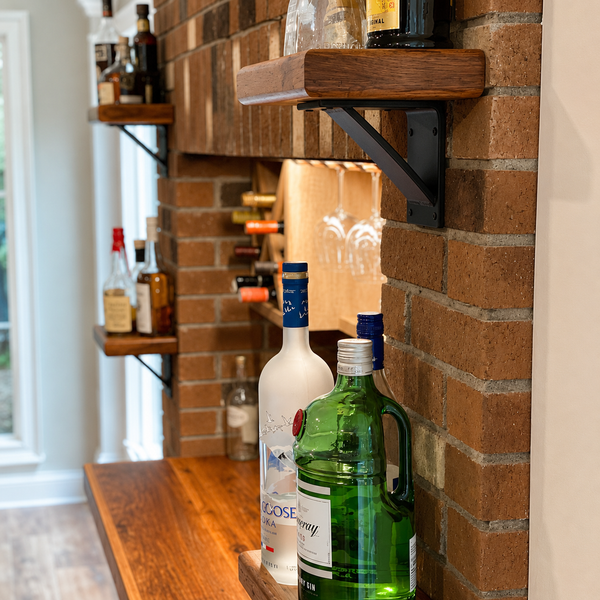
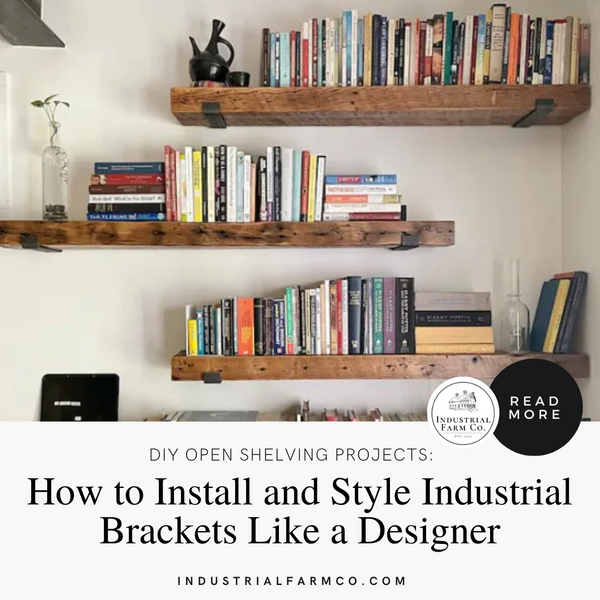
A wood shelf board on steel brackets, mounted between or beside the coat hooks, gives you the surface without furniture. A Lucas L Bracket or Glimmerglass J Bracket in matte black keeps it consistent with the rest of the hardware in the entry.
Below the hooks, a simple wood bench or a few hooks lower on the wall for bags keeps the floor clear and gives you a place to sit when putting on shoes. Floor space in an entryway is more valuable than surface space — keep it clear.
Lighting and Mirrors
Entryway lighting should be warm and bright enough to see clearly without being harsh. An industrial-style wall sconce flanking the coat area, or a single pendant above the entry, works well. Metal fixtures in a matte or aged finish fit the aesthetic. Our wall sconce collection includes options sized for entryway use.
A mirror is one of the most practical additions to any entryway: last-minute checks before you leave, light reflection in a typically narrow space. A simple frame — natural wood, distressed metal, or matte black — keeps it consistent with the industrial farmhouse look. Hang it at eye level, which for most households means center at about 57-60 inches from the floor.
Rugs and Flooring
An entryway rug anchors the space, defines the transition from outside to inside, and protects the flooring. For an industrial farmhouse entry, look for natural fiber rugs (jute, sisal, or wool) in neutral tones or simple geometric patterns. They hold up to traffic, look better with age, and fit the material sensibility of the style.
If the entryway gets heavy wet-weather use, a washable cotton flat-weave rug is more practical than a jute or sisal option. A rubber-backed mat under it prevents slipping on hard floors.
What to Leave Out
The most common entryway problem is too many things competing for attention. A coat rack, a shelf, a bench, a mirror, a rug, a plant, a console table, and a basket collection is too much for a space that most people walk through in under ten seconds.
Pick the two or three elements that solve the actual problems in your entryway (coats, keys, shoes) and leave the rest out. The industrial farmhouse entry looks best when the functional elements are well-chosen and there is clear floor space around them.
What is the most important thing to add to an industrial farmhouse entryway?
Somewhere functional to hang coats. Without dedicated coat storage, the entryway will always feel cluttered. A wall-mounted steel coat rack or a row of individual hooks on a reclaimed wood plank is the single highest-impact addition. Mount into wall studs at 66-72 inches from the floor. The Fairmount Style Coat Rack from Industrial Farm Co. is designed specifically for this use.
How do you create an industrial farmhouse entryway on a budget?
Start with two to four individual steel wall hooks mounted into studs. Add a simple wood board as a surface shelf using a pair of steel L-brackets. A neutral fiber rug and a simple mirror complete the look without furniture investment. These four elements handle the real functional problems of an entryway: coats, surfaces, flooring, and light, at a fraction of the cost of a console table and entryway furniture set.
How high should coat hooks be mounted in an entryway?
Standard coat hooks mount at 66-72 inches from the floor for adults. If the household includes children, add a second row at 42-48 inches for kids. For a coat rack with multiple hooks at varying heights, center it around 66 inches from the floor. Mount into wall studs using lag screws for full-weight coats and bags.
What kind of rug works in an industrial farmhouse entryway?
Natural fiber rugs in neutral tones: jute, sisal, or wool in simple patterns. They hold up well to foot traffic, look better with age, and fit the material sensibility of the industrial farmhouse style. For high-traffic or wet-weather entries, a washable cotton flat-weave is more practical. Use a rubber-backed mat underneath to prevent slipping on hard floors.
What storage solutions work in a small industrial farmhouse entryway?
Vertical storage is the answer in small entries. A wall-mounted coat rack or hooks keep floor space clear. A shelf at chest height on steel brackets handles keys and daily items without requiring a console table. Skip the bench if the entry is very small: a small stool you can push against the wall is more flexible. The priority is clear floor space and functional hardware mounted to the wall.