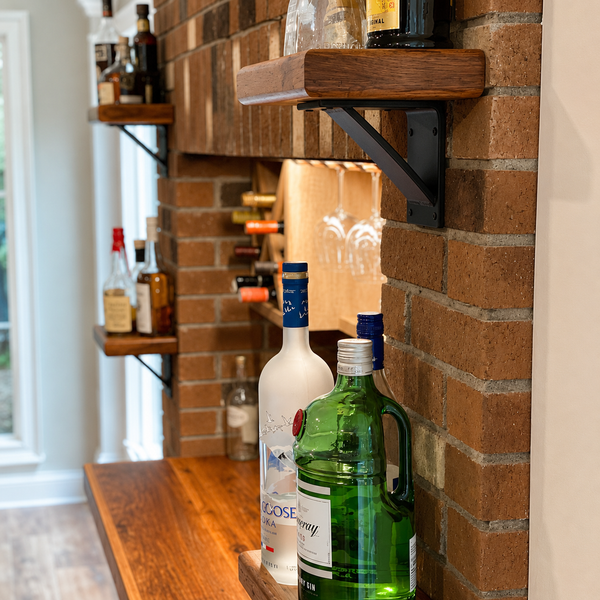
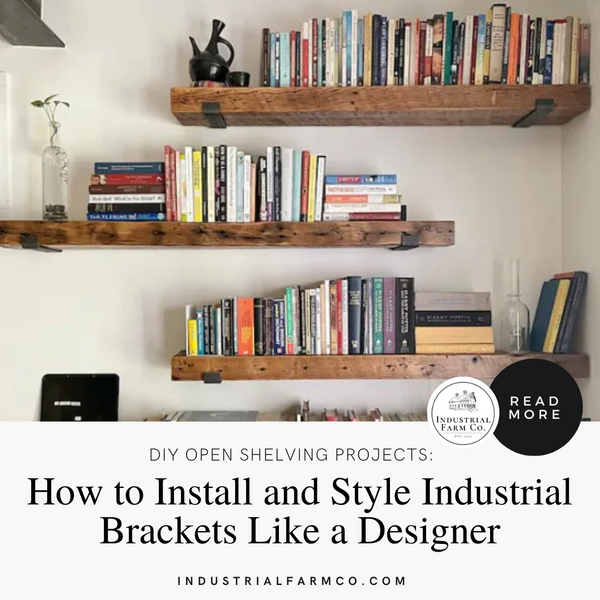
An industrial farmhouse home office uses the same logic as the style in any other room: materials that are honest about what they are, hardware that does real work, and nothing added purely for decoration. The practical outcome is a workspace that looks considered rather than decorated, with better organization, more shelf space for books and equipment, and a desk setup that works for long hours without fighting the furniture.
Industrial Farm Co. makes desk and countertop supports, shelf brackets, and wall hooks by hand in Camillus, New York. For a home office, the most useful pieces are the Lucas L Bracket for wall-mounted bookshelving, our desk and countertop supports for DIY standing desks or built-in desk surfaces, and individual wall hooks for headphones, cables, and bags. All ship within 7 business days.
Before deciding on any furniture or hardware, understand what the office actually needs to do. A home office used primarily for video calls and laptop work has different requirements from one used for physical drafting, crafting, or paperwork-heavy work. Different again for a space shared between work and creative projects.
The three questions worth answering first: How much desk surface do you need? How much storage (books, files, equipment)? And how important is the office to look good versus simply function well? The industrial farmhouse approach is to let both happen through the same choices rather than treating them as competing priorities.
Furniture and Surfaces
The desk is the most important piece in any office. For an industrial farmhouse aesthetic, the most effective approach is a wall-mounted desk surface: a thick reclaimed wood slab or butcher block board on steel desk supports, mounted into wall studs at the right height. This is cheaper than buying a desk, more durable, more customizable in width and depth, and more consistent with the industrial farmhouse material sensibility than a manufactured desk.
Our desk and countertop supports are sized for this application: they hold the desk surface to the wall while keeping the look clean. Standing desk height is typically 38-44 inches from the floor; seated desk height is 28-30 inches.
If you prefer a freestanding desk, look for one with metal legs and a wood top — the same material combination that defines the style. Avoid desks that are entirely manufactured-looking or entirely rustic. The tension between the two materials is the point.
Storage and Shelving
A home office almost always needs more shelving than it starts with. Books, binders, equipment, and reference materials accumulate. Open shelving on steel brackets is the practical solution: visible, accessible, expandable, and appropriate for the aesthetic.
For book storage, space brackets no more than 24 inches apart on a loaded shelf. Books are heavier than they look and will cause sag over time on spans wider than 30-36 inches without a center bracket. The Lucas L Bracket in matte black is the most common choice for office bookshelving: clean profile, available in sizes to match standard shelf depths, and strong enough for dense reference libraries.
Above the desk: one shelf 18-24 inches above the desk surface works for frequently accessed reference materials and equipment. Higher shelves work for things you reach less often. Don’t push shelves so high that you need to stand to reach everyday items.
For smaller items, a wall hook near the desk handles headphones and bags. One hook in the right place prevents the pile that otherwise accumulates on the desk surface.
Lighting and Atmosphere
Task lighting over the desk is non-negotiable for any extended work session. A desk lamp with a direct light source keeps eye strain manageable during long hours. Industrial-style desk lamps with metal construction and adjustable arms — gooseneck or articulating arm — fit the aesthetic and work practically.
Ambient lighting in the rest of the room prevents the harsh contrast between a bright screen and a dark room. A wall sconce or overhead fixture in an aged metal finish matches the hardware in the rest of the office while providing the fill light that makes the room comfortable to work in.
Natural light is the best option where available. Position the desk perpendicular to windows rather than facing them (to avoid screen glare) or with your back to them (to avoid backlighting on video calls).
Personalizing the Space
The industrial farmhouse style is not precious about decoration, but it is deliberate about it. One or two things on the shelves that mean something: a piece of art, a plant, a single vintage object. Not five things competing for attention.
A plant is one of the best additions to a home office. Snake plants, ZZ plants, and pothos handle low light and irregular watering without complaint, which makes them practical for a space where you are focused on other things. A plant adds life and color without requiring a decision about “decor.”
Productivity Considerations
Cord management is worth planning before you install shelving. Think about where cables need to run before deciding where shelves go. A cable tray under the desk surface, a few cable hooks on the desk leg or wall, and labeled cable organizers prevent the visible tangle that undercuts an otherwise well-organized space.
Minimizing visual clutter directly affects concentration. An office that has too many things visible — papers on the desk, items stacked on the floor, cables everywhere — increases cognitive load even when you are not looking at those things. The shelving, hooks, and organized surface space of an industrial farmhouse office design solve this practically rather than decoratively.
How do you build a DIY desk in industrial farmhouse style?
Mount a thick reclaimed wood or butcher block board to the wall using steel desk and countertop supports from Industrial Farm Co. This gives you a custom-width desk surface at exactly the right height, more durable than most manufactured desks, and consistent with the industrial farmhouse material sensibility. Mount the supports into wall studs. Seated desk height is 28-30 inches from the floor; standing desk height is 38-44 inches.
What shelving works best in a home office?
Open shelving on steel brackets, spaced no more than 24 inches apart for book-loaded shelves. The Lucas L Bracket from Industrial Farm Co. is the most common choice for office bookshelving: clean profile, available in sizes for standard shelf depths, and strong enough for dense reference libraries. Position one shelf 18-24 inches above the desk for frequently accessed items and additional shelves higher for less-used storage.
How do you keep a home office organized?
Three things matter most: clear desk surface (everything either has a place to go or gets removed), accessible shelving for what you use frequently (open shelving on steel brackets, within reach without standing), and one wall hook for bags and headphones near the desk. Cord management under the desk prevents the visible tangle that creates clutter even when the desk surface is clear.
What lighting works in an industrial farmhouse home office?
A task lamp with a direct light source on the desk for focused work. A wall sconce or overhead fixture in an aged metal finish for ambient room lighting. Position the desk perpendicular to windows to avoid screen glare from the front or backlighting on video calls from behind. Natural light supplemented with a good task lamp handles most work sessions without eye strain.
Is industrial farmhouse style appropriate for a home office?
Yes, and it suits an office particularly well because the style prioritizes function and authentic materials over decoration. A wall-mounted wood desk surface on steel supports, bookshelving on steel brackets, and matte black hardware throughout creates a workspace that looks intentional without requiring ongoing styling effort. The materials hold up well to daily use and the aesthetic doesn't compete with the work happening in the space.