Open shelving and iron brackets bring both function and charm to any room. Discover the benefits, styling tips, and versatility of these timeless elements, and how to make them work throughout your home.
Open shelving on iron brackets is one of the most versatile changes you can make to a room because it solves a functional problem while creating a visual statement at the same time. The shelf holds things. The bracket supports the shelf. The combination reads as considered and handmade in a way that closed cabinets rarely do. It works in kitchens, living rooms, bathrooms, and offices with equal effect — the main variable is what goes on the shelf.
Industrial Farm Co. makes iron and steel shelf brackets by hand in Camillus, New York. Our shelf bracket collection covers sizes for standard kitchen shelving, pantry shelving, bathroom shelves, and heavy-duty mantel applications. The most commonly installed bracket is the Lucas L Bracket for everyday shelving in any room. All brackets are made to order and ship within 7 business days.
Open shelving does three things that closed cabinets don’t: it makes what you have visible, it forces good editing (because you can always see it), and it creates an airy feel that closed storage removes from a room. A wall of open shelving in a kitchen where upper cabinets used to be transforms how the room feels as much as how it functions.
The practical argument is simple: you can see what you have, you can reach it easily, and you don’t need to open anything. The visual argument is that wood boards on iron brackets look like something someone made, rather than something someone purchased. In a home that leans toward authentic materials and honest construction, that difference matters.
Why Iron Brackets Work
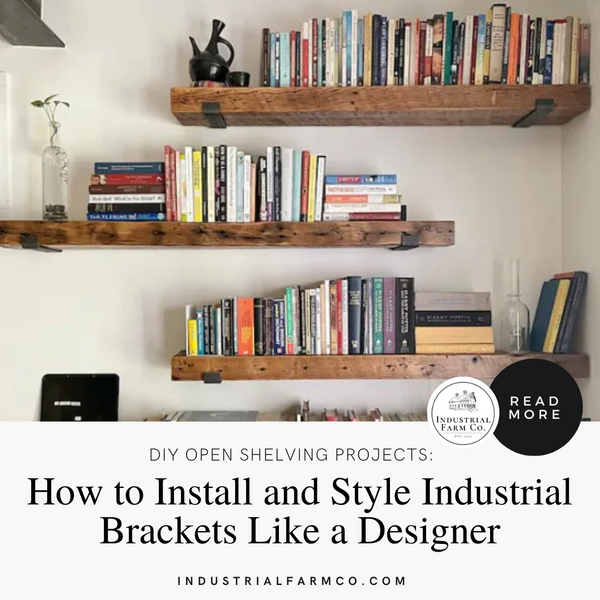
Iron and steel brackets support heavy loads and add a touch of industrial character that wood brackets or hidden fasteners don’t. The bracket is visible, which means it’s part of the design rather than hidden by it. A well-made iron bracket in matte black or raw steel finish becomes a design element in its own right while serving its structural purpose.
The key to a bracket that looks right is proportion: the bracket should reach at least 75% of the shelf depth, and the visual weight of the bracket should match the visual weight of the shelf board. A heavy reclaimed wood beam needs a substantial bracket. A thin floating shelf can use a more minimal J-style bracket.
Open Shelving by Room
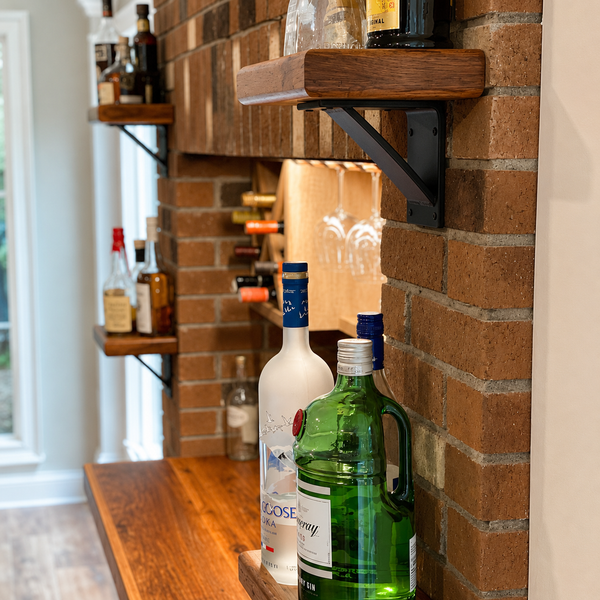
Kitchen: The highest-impact application. Replace upper cabinet runs with open wood shelving on iron brackets and the kitchen opens up immediately. Plan for real weight: dishes, glasses, and cast iron are heavier than they look. Mount brackets no more than 24 inches apart and into wall studs. Position the first shelf 18-24 inches above the countertop for comfortable reach and clearance.
The Lucas L Bracket and Seneca Shelf Support are the most common choices for kitchen shelving. The Lucas handles everyday loads. The Seneca handles heavier applications like appliance storage and thick slab boards.
Living room: Display-first, function second. Eye-level shelves (60-66 inches from the floor) read as intentional display. Shelves above that read as storage. Leave 40% empty space on living room shelves: the empty space is what makes the objects on it visible. The Glimmerglass J Bracket gives a near-floating look for living room shelves where you want the shelf to be the focus.
Bedroom: Open shelves can replace nightstands (a shelf at lamp height on either side of the bed), create a reading nook, or add storage without taking floor space. Keep bedroom shelves simple: a few objects with open space around them. The Jane J Bracket works well for compact bedroom shelves.
Bathroom: Above the toilet and above the vanity are the two main opportunities. Sealed hardwood board on steel brackets, two hooks below, and a small plant above the toilet is a complete bathroom storage solution in three wall installations. Use brackets sized to at least 75% of the shelf depth and sealed shelf material that handles humidity.
Outdoor spaces: Shelving in covered outdoor areas — a covered porch, a built-out garage workshop, or a potting area — works well with iron brackets that handle weather exposure. Use treated or naturally moisture-resistant lumber and stainless or powder-coated brackets in outdoor applications.
Getting the Installation Right
Three things determine whether open shelving holds long-term:
Wall anchoring: Into studs whenever possible. One bracket in a stud outperforms two in drywall anchors for any loaded shelf.
Bracket spacing: No more than 24 inches apart for a shelf holding real weight. For heavy loads (cast iron, dense books), 16-20 inches.
Bracket depth: At least 75% of the shelf depth. A 10-inch shelf needs a bracket reaching at least 7.5 inches from the wall.
Level is non-negotiable. Use a 48-inch level and draw a guide line before marking any bracket positions. A shelf that isn’t level reads wrong every time you look at it.
Bracket and Shelf Combinations That Work
Lucas L Bracket + white oak board: Clean, minimal, works in any room. The most versatile combination in the industrial farmhouse aesthetic.
Seneca Shelf Support + thick reclaimed wood slab: The heavy-duty kitchen or pantry application. Handles cast iron and bulk storage without flex.
Glimmerglass J Bracket + walnut board: Living room and bedroom floating-look shelving where the bracket sits behind the board.
Jane J Bracket + sealed oak board: Bathroom and compact shelving where minimal visual weight matters.
Iron and steel brackets support heavy loads, age well, and add industrial character that wood brackets or hidden fasteners don't. They are visible elements of the shelf design rather than hidden behind it. A well-made steel bracket in matte black or raw steel becomes part of the aesthetic while doing its structural job. They are especially effective paired with warm natural wood boards because the contrast between the hard steel and the warm wood is the defining visual of the industrial farmhouse style.
What size bracket do I need for my shelf?
Your bracket should extend at least 75% of the shelf depth. For a 10-inch deep shelf, the bracket should reach at least 7.5 inches from the wall. Going shorter than 75% leaves the front of the shelf unsupported and it will tip forward under load. When in doubt, size up. A bracket slightly too long for the shelf doesn't hurt anything; a bracket too short causes instability.
How far apart should iron shelf brackets be spaced?
For a shelf holding real weight (dishes, books, cast iron), space brackets no more than 24 inches apart. For heavy loads, 16-20 inches. For light decorative shelves, up to 32 inches is acceptable. Always mount into wall studs whenever possible. The wall anchor is what limits load capacity more than the bracket itself.
What wood works best with iron shelf brackets?
White oak is the most popular pairing for its grain character, strength, and compatibility with both light and dark stain. Walnut pairs naturally with raw or black steel and looks exceptional in living rooms and bedrooms. Reclaimed wood adds age and character. Butcher block works for kitchen shelves where food-safety matters. For bathrooms, use teak, cedar, or sealed hardwood with a waterproof finish.
Is open shelving practical in a kitchen?
Yes, when installed correctly and maintained well. Mount into studs, space brackets no more than 24 inches apart, and size the brackets for the load. Hardwood boards sealed with food-safe finish hold up to kitchen use. The practical advantage is visibility and accessibility: you can see what you have and reach it without opening anything. The maintenance trade-off is that open shelves collect grease and dust faster than closed cabinets, so they require more regular wiping.