Industrial farmhouse style has a rich history that blends rural charm with industrial aesthetics. From its origins in early 20th-century America to its modern interpretations, this design aesthetic continues to evolve while maintaining its rustic allure. With key elements like reclaimed wood and distressed metals, industrial farmhouse style offers a timeless and inviting approach to interior design.
The industrial farmhouse style has roots that go back over a century, but it has never felt more current. Here is where it came from, what it is actually made of, and why it keeps working in homes long after other design trends have moved on.
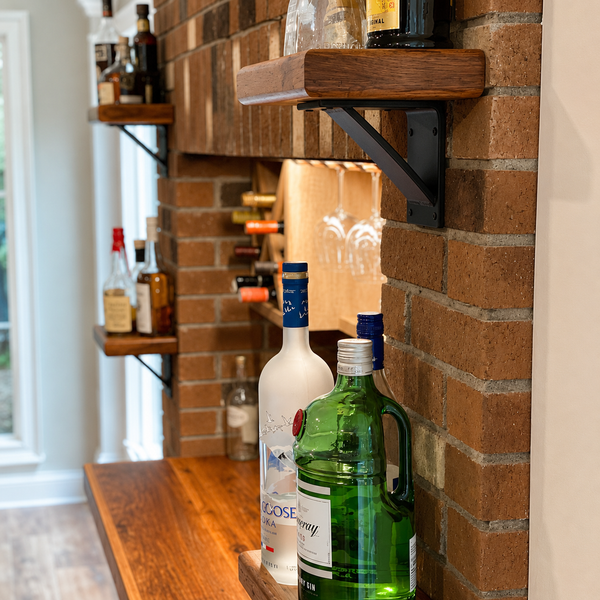
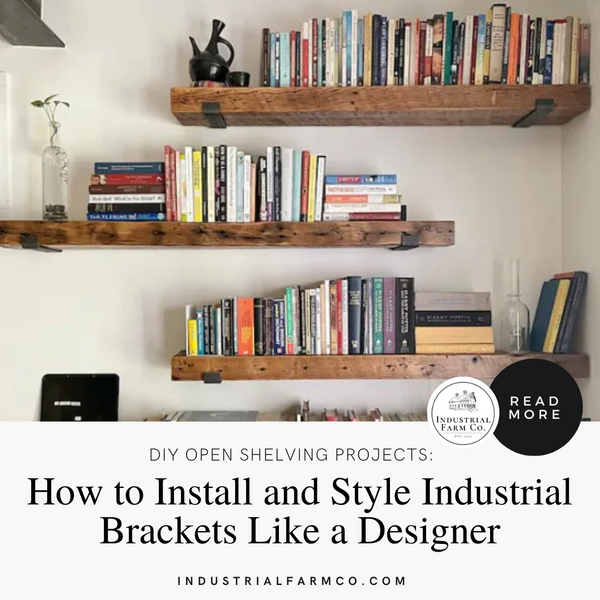
The hardware is the most accessible entry point into this style today. Industrial Farm Co. handcrafts steel shelf brackets, coat hooks, and towel bars in Camillus, New York — the metal pieces that translate the historical aesthetic into a working home. A few boards of reclaimed or rough-hewn oak on a pair of steel L-brackets is simultaneously the simplest and most characteristic move in this style.
Industrial farmhouse style traces its origins to the late 19th and early 20th centuries, when rural farmhouses and working factories occupied the same American landscape. The style that emerged was not decorative. It was practical: exposed brick walls, rough-hewn timber, utilitarian fixtures, and hardware built to last. Farmhouses needed to be functional above all else. Storage had to work. Hardware had to hold. Nothing was added that didn’t earn its place. That philosophy is still at the core of the style.
What the Style Is Built On
Reclaimed and raw wood — showing grain, knots, and age rather than hiding them
Steel and iron — in hardware, brackets, light fixtures, and furniture frames
Concrete and brick — used for their texture and durability, not their polish
Aged leather and natural textiles — linen, wool, canvas
How It Evolved
Through the mid-20th century, farmhouse and industrial aesthetics drifted apart. Modern design moved toward sleeker surfaces and manufactured materials. Then, starting in the 1990s and accelerating through the 2010s, something pulled the two back together. Part of it was a reaction to interiors that had become too polished and anonymous. Part of it was a growing interest in craft and provenance: where things came from, how they were made, whether they would last.
What It Looks Like Today
Modern interpretations are more refined than the original. The palette is more intentional, the mix of materials more deliberate. But the core commitments remain: real materials, honest construction, function first. Industrial farmhouse used to imply a full renovation. Today it can be as simple as replacing cabinet hardware with aged steel, adding open shelving on iron brackets, or swapping light fixtures for something with more presence.
How to Bring It Into Your Home
Start with materials, not colors. Introduce real wood and real metal before deciding on a paint color. The palette tends to follow the materials.
Use open shelving. A few wood boards on steel brackets is one of the easiest entries into this style.
Upgrade your hardware. Cabinet pulls, shelf brackets, coat hooks, towel bars. Low cost, high impact, and almost always overlooked.
Mix old and new deliberately. One vintage piece per room, not five. Let it stand out rather than compete.
Keep it functional. Every piece should do something. The industrial farmhouse style has no patience for decor that only decorates.
Tools and Materials
The style is built from a short list of honest materials. These are what you’ll need to bring it into your home, starting with the highest-impact changes.
Core materials:
Reclaimed or rough-hewn wood (for shelving, furniture, or accent walls)
What is the history of industrial farmhouse style?
Industrial farmhouse style originated in late 19th-century America, where rural farmhouses and working factories shared the same landscape. The aesthetic emerged from practical necessity: exposed brick, rough-hewn timber, iron hardware, and utilitarian fixtures. It evolved through the 20th century and experienced a major revival starting in the 2000s as homeowners sought interiors that felt authentic rather than manufactured.
What are the key elements of industrial farmhouse design?
The core materials are reclaimed and raw wood, steel and iron hardware, brick and concrete, and natural textiles like linen, wool, and canvas. Open floor plans, high ceilings, and exposed structure are also characteristic. Nothing is added purely for decoration: every element should be functional or reveal the honest nature of the material.
What inspired industrial farmhouse style?
Industrial farmhouse style was inspired by the working spaces of rural and industrial America: farmhouses, barns, factories, and warehouses. The rough textures, durable hardware, and practical layouts of those spaces became the aesthetic template. It drew from the arts and crafts movement's emphasis on honest materials and craftsmanship.
Is industrial farmhouse style still popular?
Yes, and sustainably so. Unlike purely trend-driven aesthetics, industrial farmhouse has persisted because it is grounded in real materials and honest function rather than surface treatments. It adapts well across budgets and room types and continues to appear in new homes, renovations, and commercial spaces.
How is industrial farmhouse different from modern farmhouse?
Modern farmhouse emphasizes soft, clean farmhouse aesthetics with shiplap, white cabinetry, and a lighter palette. Industrial farmhouse leans darker and rawer: more exposed steel and iron, more visible structure, harder edges alongside the warm wood. Modern farmhouse is often more polished; industrial farmhouse keeps more grit.