Transforming your kitchen into an industrial farmhouse haven is a delightful blend of ruggedness and warmth, where functionality meets style. By incorporating reclaimed materials, vintage accents, and thoughtful lighting, you can create a space that's both visually striking and practical for everyday living.
An industrial farmhouse kitchen pairs warm reclaimed wood and neutral paint with exposed steel: open shelving on black brackets, metal pendant lighting, and cast-iron or matte black hardware. The result is a space that works hard and looks good doing it.
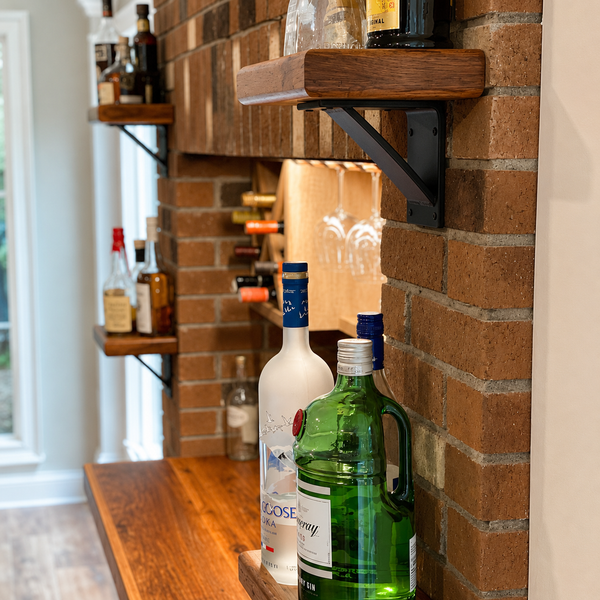
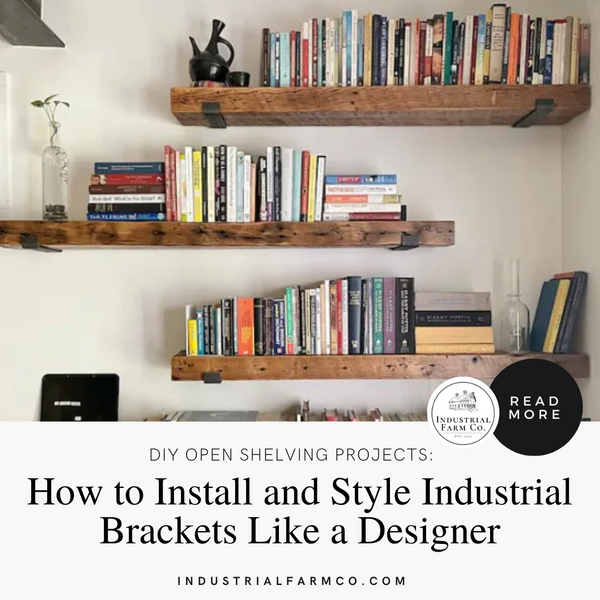
The single most effective change in most industrial farmhouse kitchens is replacing upper cabinets with open shelving on steel brackets. Industrial Farm Co.’s Hornell Industrial Shelf Supports are built for kitchen loads — heavy enough for dishes and cast iron — and mount into wall studs at 18 to 24 inches above the countertop. Add natural wood shelf boards and the transformation is immediate.
The key to an industrial farmhouse kitchen is the balance between raw industrial elements and rustic farmhouse character. Exposed brick walls, distressed wood, and metal accents set the tone. Open shelving made of reclaimed wood or natural boards paired with farmhouse-inspired cabinets in muted tones like cream or soft gray is the standard starting point.
For open shelving that holds real weight, you need brackets built for it. Our Hornell Industrial Shelf Supports are made for kitchen use: heavy enough for dishes and cast iron, with the angular character that reads as industrial without being precious about it.
Layout and Space Optimization
An open floor plan encourages seamless flow between cooking, dining, and gathering areas. The industrial farmhouse kitchen works best when it functions as a social space, not just a place to prepare food. An island or peninsula that connects to the dining area keeps the cook involved with what is happening in the room.
Vertical storage is worth prioritizing. Upper shelves, pot racks, and wall-mounted hooks use space that would otherwise go to waste while keeping frequently used items visible and accessible.
Choosing the Right Materials
Prioritize durability and authenticity. Reclaimed wood for countertops or flooring adds character with its natural grain and imperfections. Butcher block is the kitchen crossover between warm farmhouse material and functional work surface. Look for things that age well — scratches on a butcher block counter look right; the same scratches on glossy laminate just look like damage.
Incorporating Vintage Elements
Vintage pieces add the layer of history that keeps contemporary elements from feeling cold. Look for antique kitchen accessories like enamelware, mason jars, or vintage signage to put on shelves or countertops. Mixing old and new creates a look that feels curated rather than assembled.
Industrial Farm Co. offers a range of kitchen accessories that blend modern function with vintage farmhouse character, without having to search every antique market to find them.
Lighting: Function and Aesthetics
Lighting is the element most kitchens underinvest in. Industrial-style pendant lights with exposed bulbs over an island add both character and task lighting in one fixture. Rustic chandeliers or wall sconces in the dining area contribute warmth without competing with the harder elements elsewhere.
The most effective approach is layered: bright task lighting over work surfaces, ambient lighting in eating areas, and accent lighting that pulls the room together after dark. Every layer serves a different function and a different time of day.
An industrial farmhouse kitchen is about finding the balance between ruggedness and warmth. For more home decor inspiration, explore our blog on industrial farmhouse style.
Can I mix different metal finishes in an industrial farmhouse kitchen?
Yes. Choose a dominant finish for 60-70% of the space, a secondary finish for 20-30%, and a third accent finish sparingly. Matte black with aged brass, or raw steel with copper, are reliable combinations. Repeat each finish at least twice in the room so it reads as intentional.
How many brackets do I need for kitchen open shelving?
You need 2 brackets for shelves up to 36 inches long, 3 brackets for shelves 36-60 inches, and 4 or more for shelves over 60 inches. Kitchen shelves holding stacked dishes or cast iron carry real weight, so add an extra bracket every 24 inches for anything over 50 pounds.
How thick should kitchen open shelves be?
At least 1.5 inches thick for standard brackets, and 2-3 inches for heavy-duty use. Thicker wood distributes weight more evenly across brackets and gives mounting screws more material to bite into, which matters in a kitchen where shelves hold dishes and small appliances.
Do kitchen shelf brackets need to go into studs?
Yes, always install into wall studs for any shelf holding more than 25 pounds. Stud installation lets the brackets reach their full weight capacity. Drywall anchors alone support only 50-75 pounds and can fail over time under the repeated loading a kitchen shelf sees.
Will steel brackets rust in a kitchen?
Powder-coated brackets resist rust and corrosion well, including in the humidity and steam of a working kitchen. The powder coat creates a barrier that keeps moisture off the steel, and with normal cleaning the brackets hold their structural integrity and finish for decades.
Can you make custom size brackets for a kitchen with unusual dimensions?
Yes, we specialize in custom sizing with no minimum order. Older kitchens and built-in cabinetry often need dimensions no stock bracket matches. We handcraft each one to your specifications on the same 7 business day production timeline as our standard sizes.