A man cave works when it solves the right problems: a place to watch the game without negotiating the TV, a bar that holds your collection properly, shelving that displays what matters to you, and enough storage that the room can stay usable rather than becoming a catch-all. The industrial farmhouse aesthetic suits this room directly — steel hardware, reclaimed wood, matte black fixtures, and durable materials that improve with use rather than requiring protection from it.
Industrial Farm Co. makes the steel brackets, shelving hardware, wine glass racks, and bar supports that build out the structural elements of a man cave. Our full bracket collection is made to order in Camillus, New York and ships within 7 business days. Custom sizes available with no minimum order.
Good man caves are designed before they’re built. Measure the room dimensions (length, width, ceiling height) and map the electrical outlets, lighting positions, and any structural elements before making any purchase decisions. The cost of a wrong shelf run or a bar counter in the wrong place is much higher than the time it takes to plan correctly.
Divide the room into zones based on activity: a bar area, a seating and entertainment zone, a storage wall, and any dedicated recreation area (pool table, dartboard, gaming setup). Define these zones on paper before any installation begins. The separation between zones makes the room feel larger and more intentional than an undifferentiated arrangement of furniture.
Design principles that hold:
Use vertical wall space for shelving and storage — the walls are the most underused square footage in most rooms
Position the TV and primary seating for viewing angle and distance before deciding where anything else goes
Plan lighting with layers: overhead ambient, bar task lighting, and accent lighting for shelves and displays
Coordinate all metal finishes — brackets, bar hardware, hooks, fixtures — in matte black or raw steel throughout
Choosing Your Location
Basement: Privacy, cooler temperatures, and existing or easy-to-add plumbing for a wet bar. The main considerations are moisture management and lower ceilings. Best for sports viewing, gaming, and bar-focused setups.
Garage conversion: Large footprint, high ceilings, and good access for large furniture delivery. Requires insulation and temperature control work. Best for car enthusiasts, workshop combinations, or a large entertaining space.
Spare bedroom: Climate controlled, smaller footprint, and convenient access to the rest of the house. Best for a reading or gaming room, home office combination, or compact design.
Attic: Privacy and unique architecture. Requires attention to HVAC and access. Best for a quiet retreat or a specialized hobby space where the room’s character is part of the design.
Building the Bar Area
The bar is the social center of a man cave. Get it right and the room works for entertaining; get it wrong and the whole layout suffers. The key decisions: counter height, counter material, the bottle display run, and the glass storage.
Counter height: Standard bar height is 42 inches (bar stool seating at 29-32 inches). Counter height is 36 inches with standard counter stools. Decide which you want before any construction begins — changing it later means rebuilding the entire bar structure.
Counter material: Live-edge wood slabs, reclaimed barn wood, butcher block, and concrete all suit the industrial farmhouse aesthetic. Support the counter on our Seneca Shelf Supports or heavy-duty bar supports mounted into wall studs.
Bottle display: Wall-mounted shelving behind the bar for spirits. Use our Butch Shelf Supports for the bottle run — substantial enough to hold a full bottle row with real load capacity. Position the bottom shelf at 48-54 inches from the floor for easy reach.
Wine glass rack: The White Plains Wine Glass Rack mounts between the upper shelves and holds up to 8 glasses inverted. The hanging position keeps glasses clean and dust-free and creates the instantly recognizable bar aesthetic.
Lighting under the shelf: LED strip lights under the upper shelf illuminate the bottle display. Connect to a dimmer switch so the bar backlighting can be adjusted for the mood of the evening.
Lighting
Lighting in a man cave needs to do more things than lighting in any other room: bright enough for playing pool, dim enough for movie watching, task-lit for bartending, and atmospheric for a game night. Layer lighting types rather than relying on a single ceiling fixture.
Ambient: Recessed ceiling fixtures or a track lighting system for general room illumination. Install on dimmers. This is the layer you dial down for movies and up for active use.
Task: Industrial pendant lights over the bar area, 30-36 inches above the counter surface. Focused lighting over a pool table (hang lights centered above the table surface at about 60-65 inches from the floor to the bottom of the shade). Desk lamp or under-shelf lighting for any work surface.
Accent: LED strip lights behind display shelving, rope lights along architectural ledges, and whatever lighting suits specific collections on display. Warm white LEDs (2700-3000K) in all accent positions for the most flattering and inviting light.
Use industrial-style fixtures throughout — metal cages, exposed filament bulbs, aged brass or matte black finishes — consistent with the steel hardware in the rest of the room.
Shelving and Storage
Steel shelving is the organizing principle of a well-designed man cave. It holds the sports memorabilia, the audio equipment, the overflow barware, and whatever collection defines the room. It should be built to hold real loads, not decorative loads.
Memorabilia and display: The Seneca Shelf Support handles heavy display shelving with heavier objects (helmets, signed balls, framed jerseys). For lighter displays of books and smaller collectibles, the Lucas L Bracket gives a cleaner profile.
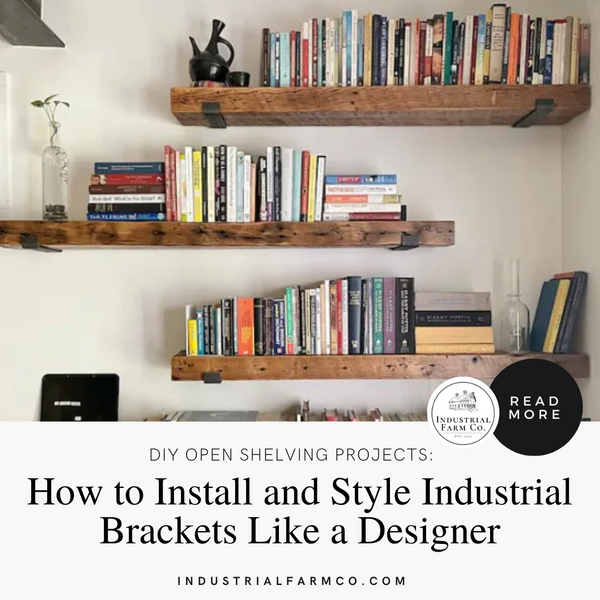
Floating shelf system: Run a shelf wall on one side of the room using consistent brackets in the same finish. Space brackets no more than 24 inches apart. Mount all brackets into wall studs with 3-inch lag screws. The shelf run reads as architectural element, not just storage.
Speaker mounting: Wall-mount speakers using heavy-duty brackets rated for the speaker’s weight plus a safety margin. Our heavy-duty bracket collection includes options in the right load range for most residential speakers.
Load guidelines: For stud mounting, plan on 50-75 lbs per bracket as a conservative design load. Always install into studs for shelving carrying more than decorative weight. Off-stud snap toggle bolts are rated up to 75+ lbs in half-inch drywall but are not a substitute for stud mounting in a heavily loaded shelf run.
Entertainment Setup
TV mounting height: Position the TV so the center of the screen is at eye level when seated (typically 42-48 inches from the floor for a sofa or bar stool seating arrangement). Higher than this strains the neck during extended viewing. Wall-mount into studs with a mount rated for the TV’s weight times 1.5.
Viewing distance: For comfortable viewing, sit at a distance 1.5 to 2.5 times the screen diagonal. A 65-inch TV ideally viewed from 8-13 feet. Plan the seating arrangement around this before buying the TV or the furniture.
Component shelving: A floating shelf run below the TV handles AV components. Use open shelving rather than closed cabinets for proper ventilation of electronics. Cable management runs through the wall or along the baseboard — plan this before mounting the TV.
Pool table: Minimum room size is 14 x 18 feet for a standard 8-foot table with adequate cue clearance. Hang pendant lighting centered above the table surface, 60-65 inches from the floor to the bottom of the shade.
Dartboard: Official throwing distance is 7 feet 9¼ inches from the front of the board to the throw line. Mounting height is 5 feet 8 inches from the floor to the bullseye. Protect the wall around the board with a wood backboard or dart catcher.
Decorative Accents
The industrial farmhouse man cave earns its character from real materials rather than purchased theme decor. Reclaimed barn wood accent walls. Exposed brick where it exists rather than manufactured brick veneer. Steel corbels and architectural details that echo the bracket hardware. Metal signage and artwork with actual age or character rather than manufactured distress.
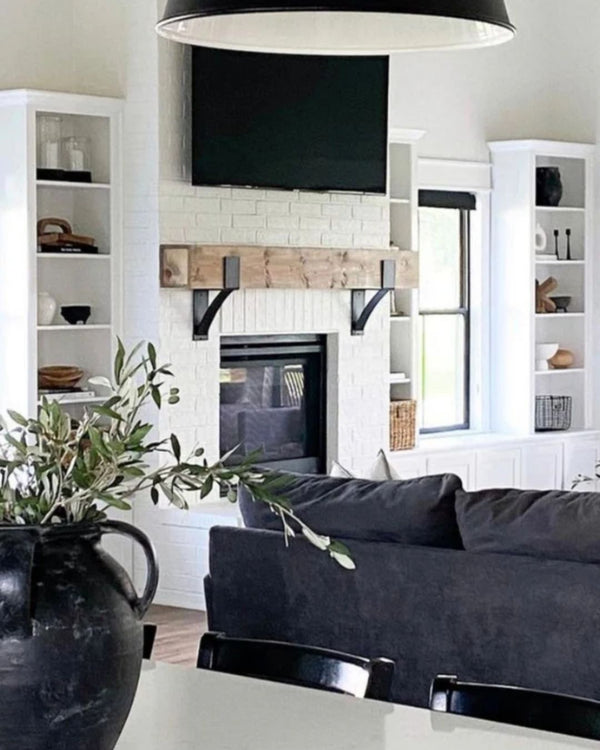
Our Albany Mantel Corbels work as architectural accent pieces on a bar or display wall as well as fireplace applications. The farmhouse bracket collection includes styles that read as both functional hardware and decorative element in a man cave context.
Color palette: Charcoal gray and black as the hard materials, warm wood tones as the counterbalance, and whatever accent comes from the specific collection or interest the room is built around. Let the objects in the room provide the accent color rather than the wall paint.
Installation Guide
Tools you’ll need:
Electronic stud finder
Level (48-inch minimum for shelf runs)
Drill with bits
Cordless impact driver
Measuring tape (25-foot)
Pencil
Safety glasses
Standard installation sequence:
Locate studs with a stud finder and mark positions in pencil along the planned shelf run
Draw a level line at the desired shelf height across the full run using a 48-inch level as the reference
Mark bracket positions along the level line at stud locations, no more than 24 inches apart
Drill pilot holes into each marked stud position
Mount brackets with 3-inch lag screws, checking level on each bracket before final tightening
Verify level across all brackets together before placing the shelf board
Secure shelf board to brackets from underneath, pre-drilling through bracket holes to prevent splitting
Load test gradually before placing the full intended load
For brackets with support bars: position the lag bolt into the bracket before holding the bracket against the wall. Use a wrench or socket set to tighten gradually. Pre-drilling and hex head lag bolts make the process cleaner in tight spaces.
Maintenance and Care
Steel hardware: Dust weekly with a microfiber cloth. Clean monthly with mild soap and water, dry thoroughly. Inspect powder coat annually for chips or scratches and touch up with color-matched spray before rust can start at exposed points.
Wood shelves: Dust regularly. Clean spills immediately. Reapply wood finish every 2-3 years. Sand and refinish for major wear. In basement installations, maintain 30-50% humidity to prevent warping.
Basement-specific: A dehumidifier in a basement man cave protects both the wood and the electronics. Maintain good airflow around AV components to prevent heat buildup.
Budget Planning
A well-planned man cave budget breaks into roughly three categories: hardware and materials (40-50%), labor for any professional work (30-40%), and accessories and finishing (10-20%). Hardware and materials include brackets, shelf boards, mounting fasteners, and lighting. Labor covers professional installation for electrical work and any structural modifications. Accessories cover LED systems, organization accessories, and the finishing touches that make the room yours.
DIY opportunities that don’t require a contractor: shelf installation with proper tools, painting and finishing, LED strip lighting, and styling. Professional requirements: structural modifications, major electrical work, and any load-bearing changes to the room structure.
What brackets work best for a home bar shelving run?
The Butch Shelf Supports from Industrial Farm Co. are the right choice for a bar bottle display: substantial construction, load capacity appropriate for a full bottle row, and a modern industrial profile. Position the bottom shelf at 48-54 inches from the floor for easy reach and comfortable eye-level bottle display. Mount into wall studs no more than 24 inches apart with 3-inch lag screws.
What height should a home bar counter be?
Standard bar height is 42 inches from the floor, paired with bar stools at 29-32 inches seat height. Counter height is 36 inches, paired with counter stools. Decide which you want before any construction begins — changing bar counter height after the fact means rebuilding the entire structure. Support the counter on heavy-duty steel brackets mounted into wall studs.
How do I create a floating bar counter with steel brackets?
Mount Seneca Shelf Supports from Industrial Farm Co. into wall studs at bar height (42 inches for standard bar seating, 36 inches for counter seating). Use a thick wood slab — live-edge, reclaimed barn wood, or butcher block — as the counter surface. Secure from underneath through the bracket mounting holes. Use a minimum of two supports for spans up to 48 inches and add a third at the center for wider spans.
What type of wine glass rack works best for a home bar?
The White Plains Wine Glass Rack from Industrial Farm Co. mounts between the upper bar shelves and holds up to 8 wine glasses inverted. The hanging position keeps glasses clean and free from dust, creates the classic bar visual, and doesn't require a separate piece of furniture. Mount between two shelving runs so the rack is accessible from the front without reaching overhead.
What is the minimum room size for a pool table in a man cave?
A standard 8-foot pool table requires a minimum room size of 14 x 18 feet for adequate cue clearance on all sides. Measure your available space before purchasing. A 7-foot table requires a minimum of about 13 x 17 feet. Install pendant lighting centered above the table, with the bottom of the shade 60-65 inches from the floor for proper illumination without interference with play.