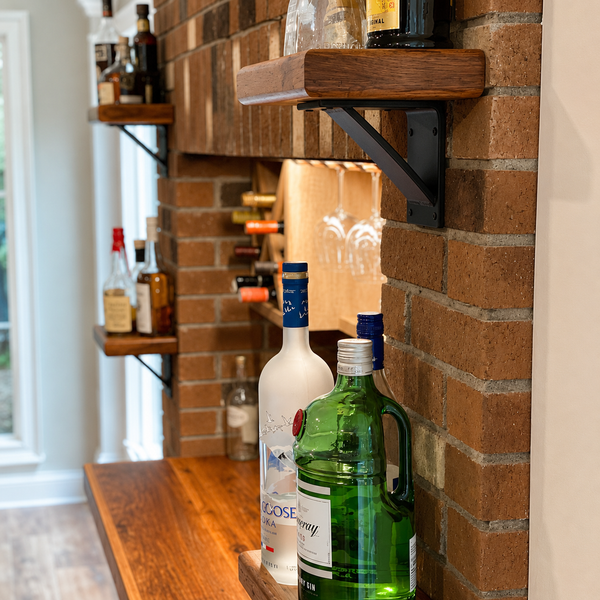
Incorporating reclaimed wood into your industrial farmhouse design adds warmth, character, and a sense of history to your space. From furniture to accent walls and small decorative touches, reclaimed wood enhances the rustic charm of your interior while making an eco-friendly statement.
Reclaimed wood adds something to an industrial farmhouse interior that no manufactured material can replicate: actual history. The knots, grains, color variations, and surface texture of a board that was part of a barn or factory floor carry decades of character that new lumber simply doesn’t have. Paired with steel brackets and hardware, reclaimed wood is the material that makes the industrial farmhouse style look and feel authentic.
Industrial Farm Co. makes the steel side of the reclaimed wood equation: shelf brackets sized for the weight and depth of reclaimed wood boards, coat hooks that mount into old-growth lumber planks, and mantel supports that hold thick reclaimed beams above a fireplace. Our full bracket collection is made to order in Camillus, New York and ships within 7 business days.
Reclaimed wood tells a story. Each knot, grain variation, and imperfection reflects its previous life — whether from an old barn, factory, or warehouse. This history adds depth and authenticity to an interior that new lumber cannot approximate. The patina and surface character that develops over decades of use cannot be manufactured or applied.
Using reclaimed wood is also an environmentally considered choice: it repurposes existing material that would otherwise be discarded, reducing demand for newly harvested timber. For a style that values honest materials and honest construction, reclaimed wood fits both on aesthetic and practical grounds.
Finding Reclaimed Wood
Locating quality reclaimed wood takes more effort than buying new lumber, but the sources are more plentiful than most people expect. Salvage yards and architectural salvage shops stock beams, floorboards, and siding pulled from demolition projects. Online marketplaces connect buyers with sellers who have surplus reclaimed material. Demolition sites and buildings undergoing renovation are worth a direct inquiry — material that would otherwise be disposed of is often available at low or no cost if you can remove it yourself.
When evaluating reclaimed wood, check for structural soundness: avoid boards with significant rot, active insect damage, or deep cracks that compromise load capacity. Surface weathering and aesthetic imperfections are features; structural damage is a defect. For shelving applications, the board needs to be flat enough to sit without rocking on the brackets.
Reclaimed Wood Shelving
Open shelving is where reclaimed wood has the most immediate impact in an industrial farmhouse interior. A reclaimed oak or pine board on a pair of steel brackets transforms a blank wall into a display surface with immediate character and warmth.
For reclaimed wood shelving, size your brackets for the actual depth and weight of the board. Reclaimed boards are often thicker and heavier than standard lumber — particularly old-growth beams that were cut before modern dimensional lumber standards. A 3-inch thick reclaimed beam on 14-inch deep brackets needs brackets with more capacity than a 1.5-inch pine board on 8-inch brackets.
Our Lucas L Bracket handles everyday reclaimed wood shelving loads. For very thick or heavy slabs, the Seneca Shelf Support provides more contact points with the wall and greater load capacity. Mount into wall studs for any shelf carrying real weight.
Accent Walls and Ceilings
An accent wall of reclaimed wood planks is one of the most dramatic transformations available in the industrial farmhouse style. Weathered barn siding or salvaged floorboards installed horizontally or vertically create immediate warmth, depth, and visual texture that paint alone never achieves.
When mounting planks to a wall, locate studs and fasten directly into them with a finish nailer or construction adhesive plus nails. Start with a level reference line and work up or out from it — a wall that starts straight stays straight through the full run. For horizontal installation, work from the center of the wall outward so edge cuts are symmetrical.
A reclaimed wood accent wall is also the ideal mounting surface for functional hardware: steel coat hooks or racks in the entryway, open shelves on steel brackets in a dining room or bedroom. The hardware on the wall earns its place rather than just decorating it.
Reclaimed Wood Flooring
Reclaimed wood flooring brings the same character to the floor that reclaimed boards bring to shelves and walls. Wide-plank boards in particular — the kind of old-growth lumber that isn’t available in standard lumber today — add a visual warmth and scale that contemporary flooring products rarely match.
Reclaimed flooring installation is more demanding than standard hardwood because the boards may not be perfectly consistent in thickness or width. Professional installation is recommended unless you have significant flooring experience. The payoff is a floor that improves with age rather than one that shows wear as damage.
Smaller Decorative Uses
Beyond large applications, reclaimed wood works well in smaller touches: a frame around a mirror, a shelf edge, a planter box, or a simple storage crate made from salvaged boards. These smaller objects introduce the material character at a lower commitment and lower cost than a full shelving run or accent wall.
These smaller touches are often the most accessible entry point into reclaimed wood for a rented space or a first application. A single reclaimed wood tray or crate on a shelf introduces the material and the patina without requiring installation.
Maintenance and Care
Reclaimed wood maintenance is straightforward. Regular dusting and periodic cleaning with a damp cloth preserve the surface. For shelving and furniture, apply a protective sealant or penetrating oil finish when the surface starts to look dry or faded. Reapply annually in kitchen and bathroom environments where the wood sees more moisture and cleaning product exposure.
For reclaimed wood used as flooring, follow standard hardwood floor maintenance: clean spills promptly, use felt pads under furniture, and refinish when the surface finish wears through rather than when the wood itself shows wear. Reclaimed wood is typically old-growth lumber with tight grain that refinishes well and improves with each cycle.
Reclaimed wood is lumber previously used in buildings, barns, factories, or outdoor structures that has been salvaged and repurposed. Its value in interior design comes from the character that develops over decades of use: tight grain patterns, natural patina, surface texture, and unique imperfections that manufactured lumber cannot replicate. It is also an environmentally considered choice that reuses existing material rather than requiring newly harvested timber.
Where do you find reclaimed wood?
Architectural salvage yards and salvage shops carry reclaimed beams, floorboards, and siding. Online marketplaces connect buyers with sellers who have surplus material. Demolition sites and buildings undergoing renovation are often a direct source if you can arrange removal with the contractor. Specialty reclaimed wood dealers stock curated material with known history and dimensions.
What brackets work best for reclaimed wood shelving?
Size brackets to at least 75% of the reclaimed board's depth and choose a style rated for the board's actual weight. Reclaimed boards, especially old-growth lumber, are often heavier than standard dimensional lumber of the same dimensions. The Lucas L Bracket from Industrial Farm Co. handles everyday reclaimed wood shelving. The Seneca Shelf Support handles thick beams and heavy slabs with more wall contact points. Always mount into wall studs.
How do you maintain reclaimed wood?
Regular dusting and cleaning with a damp cloth preserves the surface. Apply a protective sealant or penetrating oil finish when the surface looks dry or faded, and reapply annually in kitchen and bathroom environments. For reclaimed wood flooring, clean spills promptly, use felt pads under furniture, and refinish when the surface finish wears through. Reclaimed old-growth wood is typically dense and refinishes well.
Can reclaimed wood be used on accent walls?
Yes, and it is one of the most effective applications. Weathered barn siding or salvaged floorboards installed horizontally or vertically on a single accent wall create immediate warmth and texture that paint cannot replicate. Fasten directly into wall studs with a finish nailer or construction adhesive plus nails. Start with a level reference line. An accent wall of reclaimed wood is also an ideal mounting surface for steel coat hooks, brackets, and hardware.