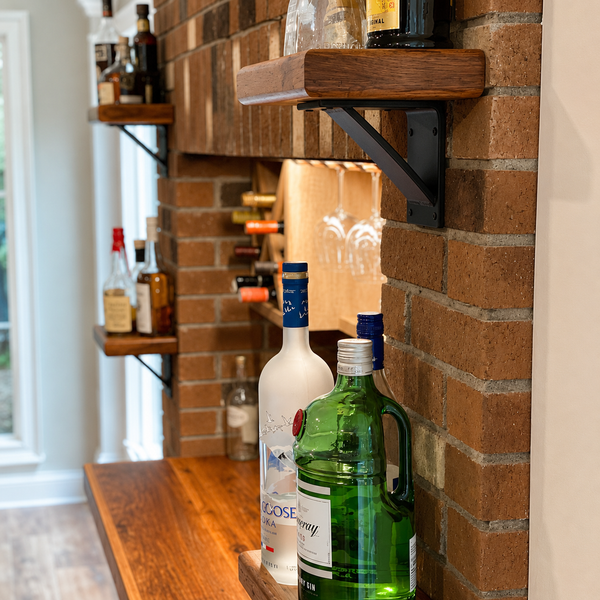
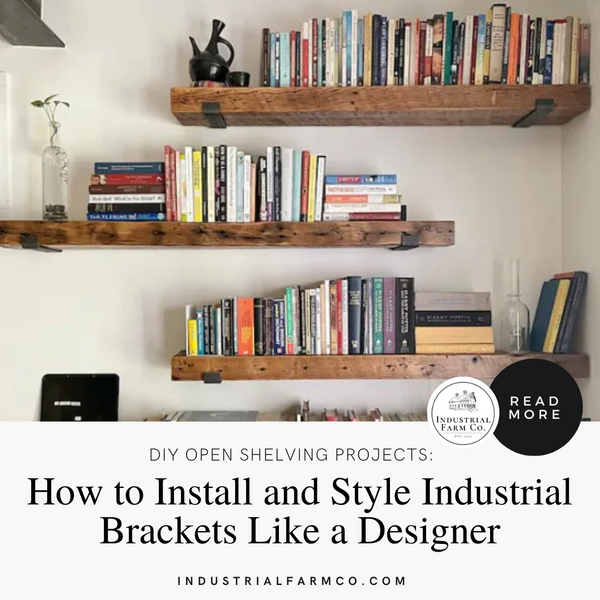
The beauty of the industrial farmhouse style lies in its perfect balance of form and function. By thoughtfully incorporating these metal elements, you'll create a home office that looks professionally designed and enhances your productivity.
A well-organized home office uses wall space for the storage that would otherwise go to floor furniture or desk clutter. A floating desk surface on steel supports, bookshelving on steel brackets above the desk, and wall hooks for headphones and bags handles the full organizational challenge of a home office in three wall installations — and keeps the floor and desk surface clear for actual work.
Industrial Farm Co. makes the hardware for this approach: the Lucas L Bracket for bookshelving, the Seneca Shelf Support for heavier shelf loads and desk surfaces, the Jane J Bracket for compact storage shelves, and the Elizabeth Wall Hook for cables, headphones, and bags. All made in Camillus, New York and shipping within 7 business days.
The desk surface is the most important element in a home office, and a wall-mounted desk surface on steel supports is the most practical and space-efficient option. A thick reclaimed wood or butcher block board on Seneca Shelf Supports mounted into wall studs gives you a custom-width desk at exactly the right height, more durable than most manufactured desks, with no legs taking floor space.
For seated work: desktop at 28-30 inches from the floor. For a standing desk: 38-44 inches. If you want both: mount the desk at standing height and add an adjustable stool, or mount at seated height and add a standing mat.
The Lucas L Bracket handles everyday bookshelving loads above and beside the desk. Mount one shelf 18-24 inches above the desk surface for frequently accessed reference materials. Add additional shelves above for storage you reach less often. Space brackets no more than 24 inches apart on shelves holding real book loads.
Maximize Vertical Space
The wall above and beside the desk is the most productive organizational real estate in a home office. Use it for books, files, reference materials, and equipment storage that would otherwise occupy the desk surface or require a separate bookcase on the floor.
For heavier loads or wider shelf spans: the Seneca Shelf Support provides more wall contact and a higher load rating than a standard L-bracket. Use it on shelves carrying printer equipment, heavy reference libraries, or display that includes ceramics and heavier objects.
For smaller auxiliary storage — a shelf near the printer, a small display shelf in a corner, or a narrow shelf along the side wall: the Jane J Bracket provides a near-floating look at compact dimensions. Good for locations where a standard L-bracket would feel visually heavy for the scale of the shelf.
Key planning principle: position shelves for the frequency you access them. Things used daily should be within arm’s reach from the chair. Things used weekly can be at standing reach. Things used monthly can go to upper shelving that requires moving from the chair.
Smart Cable Management
Cord management is worth planning before shelving is installed, not after. The Elizabeth Wall Hook is the most direct solution: mount it near the desk for headphones, charging cables, and bag hanging. One hook at a consistent location prevents the cable and headphone pile that accumulates on the desk surface when there’s no designated place for them.
For power cables running from desk equipment to wall outlets: a cable tray mounted under the desk surface keeps them bundled and out of sight. A velcro cable tie at each bracket or desk leg where cables change direction prevents tangling as cables shift. Label cables where they terminate — knowing which cable is which saves significant time when equipment needs to be reconfigured.
Styling for Productivity
The visual environment of a home office affects concentration directly. An office with too many visible things — papers on the desk, objects stacked without purpose, cables everywhere — increases cognitive load even when you’re not looking at those things.
Consistent bracket finishes across all shelving in the office create visual order. A single metal finish — matte black throughout, or raw steel throughout — reads as designed. Mixed finishes in a small space read as assembled.
Leave 30-40% of shelf surface empty. Books and supplies at capacity on every shelf creates visual noise. Objects with open space around them read as considered. The open space is not wasted space; it is the space that makes the rest of the shelf readable.
Plants in the Home Office
A plant is one of the most effective additions to a home office because it provides organic form and color without requiring styling decisions. Snake plants, ZZ plants, and pothos handle lower light and irregular watering without complaint. A snake plant in a corner or a small pothos trailing from a shelf edge adds life to the office without requiring daily attention.
Maintaining the System Long-Term
A home office organization system works when the desk surface is cleared completely at the end of each work session. Everything either has a designated place (shelf, hook, drawer) or it gets removed. The desk surface itself is not storage.
Periodically check bracket tightness, especially on desk surfaces that get regular load from leaning on or pressing down on the work surface. Any shelf that sees daily weight-bearing use should be checked quarterly for loosening at the fasteners.
What is the best way to organize a home office using wall space?
Mount a floating desk surface on steel supports, add bookshelving on steel brackets above and beside the desk, and install wall hooks for headphones, cables, and bags near the chair. This approach puts all storage on the wall, keeps the floor clear, and maintains a clear desk surface for actual work. Industrial Farm Co.'s Seneca Shelf Support works for desk surfaces and heavy shelving; the Lucas L Bracket handles everyday bookshelving.
How do you build a floating desk with steel brackets?
Mount Seneca Shelf Supports into wall studs at seated desk height (28-30 inches from the floor) or standing desk height (38-44 inches). Attach a thick reclaimed wood or butcher block board to the supports from underneath. The result is a custom-width desk surface at exactly the right height with no legs taking floor space. Use two supports minimum and add a third for spans over 48 inches.
How do you manage cables in a home office?
Plan cable routes before installing shelving. Mount an Elizabeth Wall Hook near the desk for a permanent headphone and cable storage location. Use a cable tray under the desk surface to bundle power cables out of sight. Add velcro cable ties at each point where cables change direction. Label cables at each end so you know which cable is which when equipment needs reconfiguring.
What shelving bracket works best above a desk?
The Lucas L Bracket from Industrial Farm Co. handles everyday bookshelving loads at clean proportions that suit most desk arrangements. For heavier loads or wider shelf spans, the Seneca Shelf Support provides more wall contact and higher load capacity. For smaller auxiliary shelves in tight positions, the Jane J Bracket gives a near-floating look at compact dimensions. Space brackets no more than 24 inches apart for book-loaded shelves.
How do you keep a home office organized long-term?
Clear the desk surface completely at the end of each work session. Everything either has a designated shelf position, a hook location, or a drawer. The desk surface is not storage. Periodically check bracket tightness, especially on desk surfaces that receive daily pressure. A home office organization system maintains itself when everything has exactly one place to be and goes back to that place consistently.