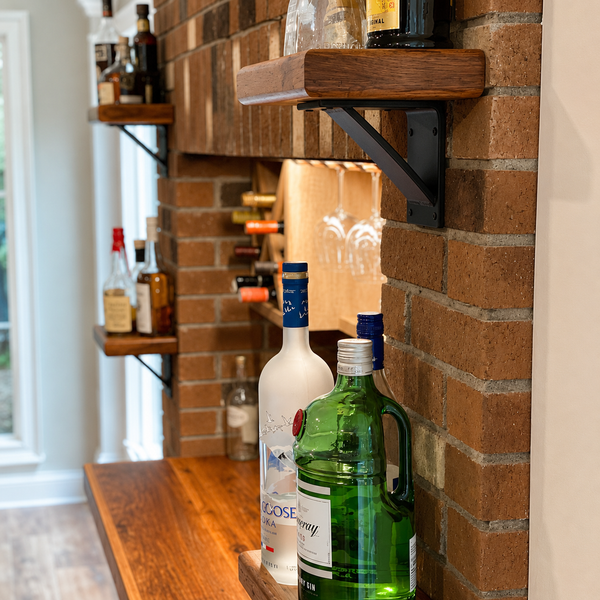
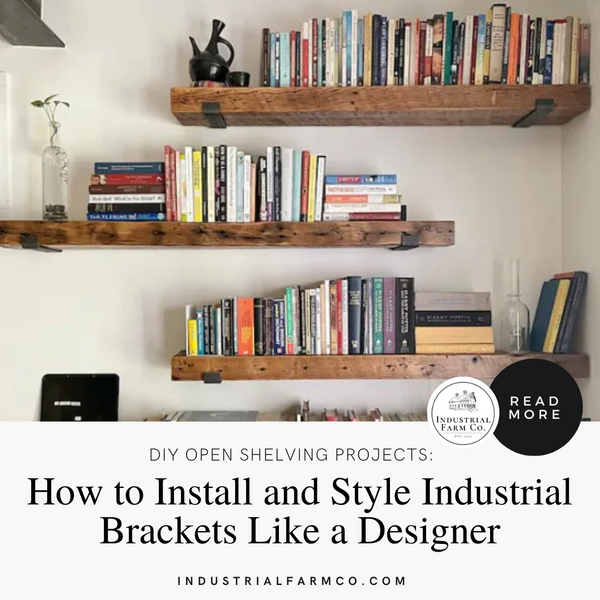
Delves into the art of crafting iron brackets, highlighting its rich history, meticulous techniques, and skilled artisans. It emphasizes the tradition passed down through generations, the careful selection of materials, and the dedication to precision. Contrasting with mass production, it celebrates the commitment to excellence and heritage in handcrafted iron brackets. Overall, it invites readers to appreciate the craftsmanship and quality inherent in each piece, steeped in tradition and mastery.
Every Industrial Farm Co. bracket starts as flat steel and ends as a finished piece of hardware through a process of cutting, bending, forging, and welding done by hand in our Camillus, New York shop. The process hasn’t changed because the results haven’t needed to. Heavy-gauge American steel, shaped by skilled craftspeople, produces hardware that holds its weight and its finish over decades of daily use. That’s what makes handcrafted brackets different from manufactured ones.
Industrial Farm Co. is a family-owned shop in upstate New York. Every bracket, hook, and rack we make is cut, bent, and welded here — not sourced from overseas. Our full bracket collection ranges from minimal L-brackets for everyday shelving to heavy-duty mantel supports for thick reclaimed beams. All are made to order and ship within 7 business days.
Bracket craftsmanship represents something specific: the decision to make things by hand when machines could produce them faster and cheaper. That decision is made because hand fabrication produces different results. Welds that are checked and dressed individually. Bends that are true to the design rather than a production tolerance. Finishes that are applied by someone who can see when they’re right.
This tradition in ironwork goes back centuries. Blacksmiths and metalworkers have shaped iron for architectural hardware since before industrial manufacturing existed. The techniques — forging, bending, welding, finishing — are the same ones used today. What’s different is the precision available through modern tools and the consistency that comes from a dedicated shop rather than a general fabricator.
From Steel to Bracket: The Process
The process of making a steel bracket has four main stages:
Cutting: Steel bar or flat stock is cut to length. The cut determines the proportions of the finished bracket: the height of the vertical arm, the depth of the horizontal arm, and the relationship between them. Accurate cutting is the foundation of a bracket that looks right at scale.
Bending and forming: The steel is bent to the bracket’s profile. For a standard L-bracket, that’s a single 90-degree bend. For more complex profiles — J-brackets, corbels, mantel supports with multiple contact points — the forming requires multiple operations and careful alignment between each. The angle of the bend determines how the bracket sits against the wall and under the shelf.
Welding: Where pieces join — a gusset added for strength, a mounting flange attached, or decorative elements added to a support — welding bonds the steel permanently. The quality of the weld determines the strength of that joint under load. A well-executed weld is invisible in the finished piece; a poor one shows in the surface finish and, eventually, in structural performance.
Grinding and dressing: Welds are ground smooth, sharp edges are dressed, and the piece is prepared for finishing. This is the stage that separates fabricated metal from finished hardware: the attention to surfaces that will be visible in the installed piece.
Material Selection
Premium-grade steel is chosen for its strength, consistency, and ability to hold a finish long-term. The specific grade varies by application: standard shelf brackets use structural steel with appropriate yield strength for the expected loads. Heavy-duty mantel supports use heavier stock with more surface area at the wall connection.
Material selection determines load capacity before any installation variable comes into play. A bracket made from undersized or inconsistent stock will flex or fail under loads that a properly specified bracket handles without issue. This is why materials matter as much as the fabrication that follows.
Finishing
The finish on a steel bracket determines both how it looks and how it holds up over time. The most popular finish options at Industrial Farm Co.:
Matte black powder coat: The most popular option. Provides a hard, uniform surface that resists chipping and is easy to clean. The matte surface doesn’t show fingerprints or light scratches the way a gloss finish does.
Raw steel: Uncoated steel that develops a natural patina over time. Requires occasional care — a thin oil coat prevents rust in humid environments. The look evolves with age in a way that powder coat doesn’t.
Clear coat: A protective clear finish that preserves the natural steel color without allowing the patina to develop. Bridges the gap between raw steel and powder coat.
The finish is applied after all fabrication is complete, which means the weld dressing and surface preparation that happens before finishing determines how the finish looks. A finish applied over poorly prepared steel telegraphs every imperfection. Done right, the finish is the last step that makes the bracket look like a product rather than a component.
Why Handcrafted Matters
In an era of mass production, handcrafted hardware carries a real distinction. Each bracket made in our shop is checked individually rather than sampled from a production run. Welds are dressed by the person who made them. Finishes are applied with attention to the specific piece rather than optimized for throughput.
The result is hardware with tolerances and finish quality that don’t come from manufacturing volume. It’s also hardware made by people who can answer questions about how it’s made, what loads it handles, and how to install it correctly — because they were there when it was made. That’s the practical value of a handcrafted piece beyond its appearance.
Every bracket is made by hand in Camillus, New York through four stages: steel is cut to the correct proportions, bent and formed to the bracket profile, welded where pieces join, and ground and dressed before finishing. Finishing options include matte black powder coat, raw steel, and clear coat. All brackets are made to order to the customer's specified size and finish.
What steel is used in Industrial Farm Co. brackets?
Premium-grade American structural steel sized for the expected load of each bracket application. Standard shelf brackets use appropriate structural steel with adequate yield strength for everyday loads. Heavy-duty mantel supports and corbels use heavier stock with more wall contact. The specific grade is selected to match the bracket's design load, not minimized to reduce material cost.
What finish options are available for IFC brackets?
Matte black powder coat is the most popular option: hard, uniform, and easy to maintain. Raw steel develops a natural patina over time and requires occasional care in humid environments. Clear coat preserves the natural steel appearance without allowing patina to develop. All finishes are applied after fabrication is complete and the surface has been properly prepared.
What is the difference between handcrafted and mass-produced brackets?
Handcrafted brackets are individually fabricated and checked rather than sampled from a production run. Welds are dressed by the fabricator who made them. Finish quality reflects attention to the specific piece rather than throughput optimization. The practical differences show in weld consistency, surface finish quality, and the ability to hold specified tolerances across a batch.
Where are Industrial Farm Co. brackets made?
All Industrial Farm Co. brackets, hooks, racks, and hardware are made by hand in Camillus, New York. This is not a company that sources product overseas and badges it domestically. Every piece is cut, bent, welded, and finished at our shop in upstate New York.